
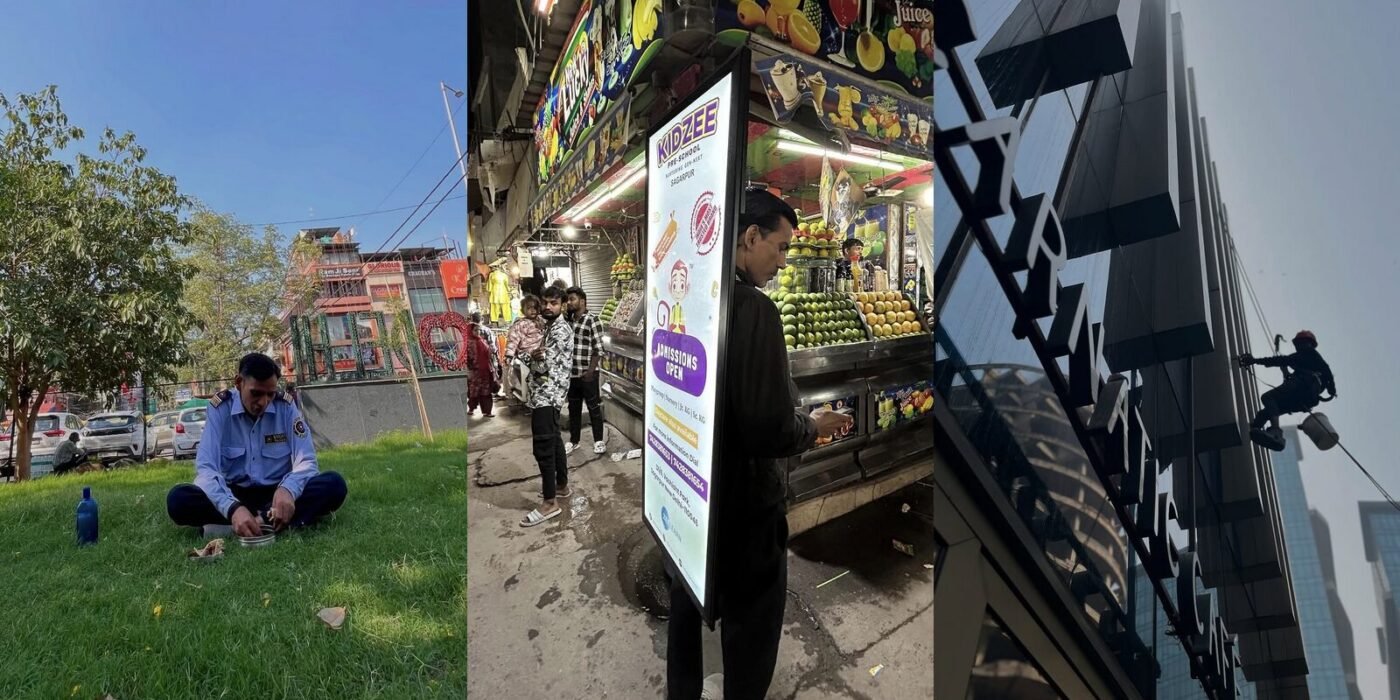
I have cared about workers for a long time now. Not in an abstract, policy-paper way. In a very specific way, watching people build the things I use every day and get almost nothing back for it. A mason who put up walls that will outlast him by decades, still not sure if he’ll get paid on time this month. A delivery rider soaked through in July rain because an app decided fifteen minutes was a fair window. That never sat right with me.
It gets worse when you add climate change into the picture. The people least responsible for it, the labourers, the farmers, the workers who never flew anywhere or ran a factory, are the ones standing outside in the heatwaves and the flooding first. They didn’t cause this. They’re paying for it anyway. That felt like something worth writing about properly, not as a footnote in a business story.
So that’s what Labour Lens is.
Most news about work in India gets written from a distance. A policy update here, a GDP number there. The person actually pouring concrete, stitching garments, or riding a bike through traffic for fifteen rupees a delivery almost never gets to speak for themselves in that story. We wanted to fix that, at least a little.
Here’s roughly how. Ground Reports means we actually go to the brick kiln, the construction site, the delivery hub, the farm, instead of writing from a press release. Explainers means breaking down the labour laws and policies that quietly decide who gets paid what, and who gets protected when something goes wrong. And on video and our podcast, we just get out of the way and let workers tell their own stories, in their own words.
We don’t have a big newsroom behind us. What we do have is a plan to go find the story instead of waiting for someone to hand it to us, and to keep this reporting free to read. That second part only works if enough readers think it’s worth supporting directly, instead of relying on ads that usually end up shaping the coverage anyway.
If you’ve got a story from your workplace, your neighbourhood, or your industry that deserves this kind of attention, there’s a page for exactly that. Write to us. And if you’re able to support the work financially, it goes straight back into more reporting. Not overhead.
Thanks for being here.